
What Happens in a Toddler Music Class? A Parent’s Guide
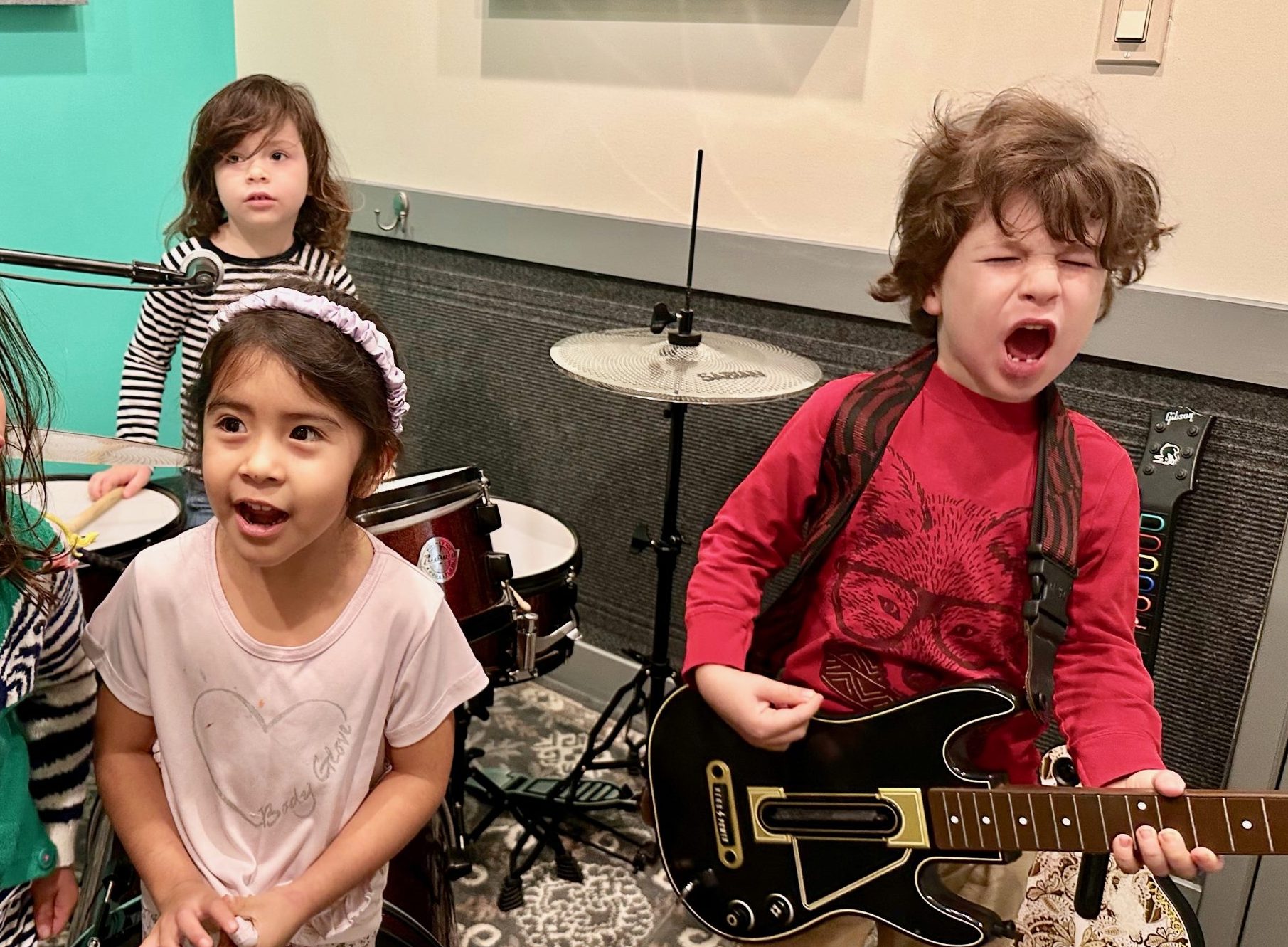
If you’re considering enrolling your child in a toddler music class, one of the biggest questions is simple: “What will my child actually do during the class?”
We recently spoke with a parent who was hesitant to sign up because they weren’t sure what to expect. They imagined something too structured and possibly overwhelming for their child. After attending their first session, they were surprised by how natural and engaging it felt. Their toddler spent part of the class observing, part participating, and by the end, was smiling and clapping along.
Our toddler music classes are designed to feel welcoming, flexible, and developmentally appropriate.
A Typical Toddler Music Class Structure
While every class has its own flow, most toddler music classes follow a consistent structure that helps children feel comfortable and engaged.
A class often begins with a welcome song. This helps children transition into the environment and recognize familiar routines. From there, activities shift between singing, movement, and simple rhythm exercises. Toward the end, there is usually a calming or closing activity to help children wind down.
This balance between repetition and variety is what keeps toddlers engaged without overwhelming them.
📊 Chart: Sample Class Breakdown
| Activity | Purpose |
| Welcome Song | Builds routine + comfort |
| Movement Activities | Develops coordination |
| Instrument Play | Introduces rhythm |
| Group Songs | Encourages participation |
| Closing Activity | Creates calm transition |
Singing and Familiar Songs
Singing is one of the core elements of toddler music classes. Songs are often simple, repetitive, and easy to follow.
These songs help toddlers develop language skills and memory. Over time, children begin to recognize patterns and anticipate what comes next.
Many parents notice that their children start singing songs at home, which reinforces what they’ve learned in class.
Our song list is full of recognizable tunes that we know kids love including Lowrider, Surfing Safari, Jump In The Line and more!
Movement and Rhythm Activities
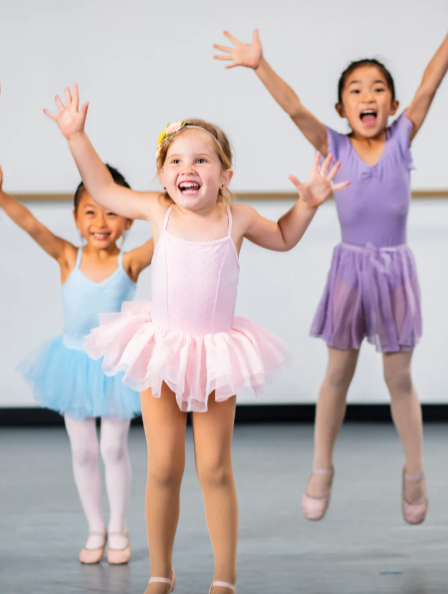
Movement is a key part of toddler music classes. Activities often include clapping, swaying, dancing, or moving to a beat.
These movements help develop coordination and body awareness. They also give children a way to physically engage with music.
For many toddlers, movement is the most natural way to participate, especially in the early stages.
Exploring Instruments
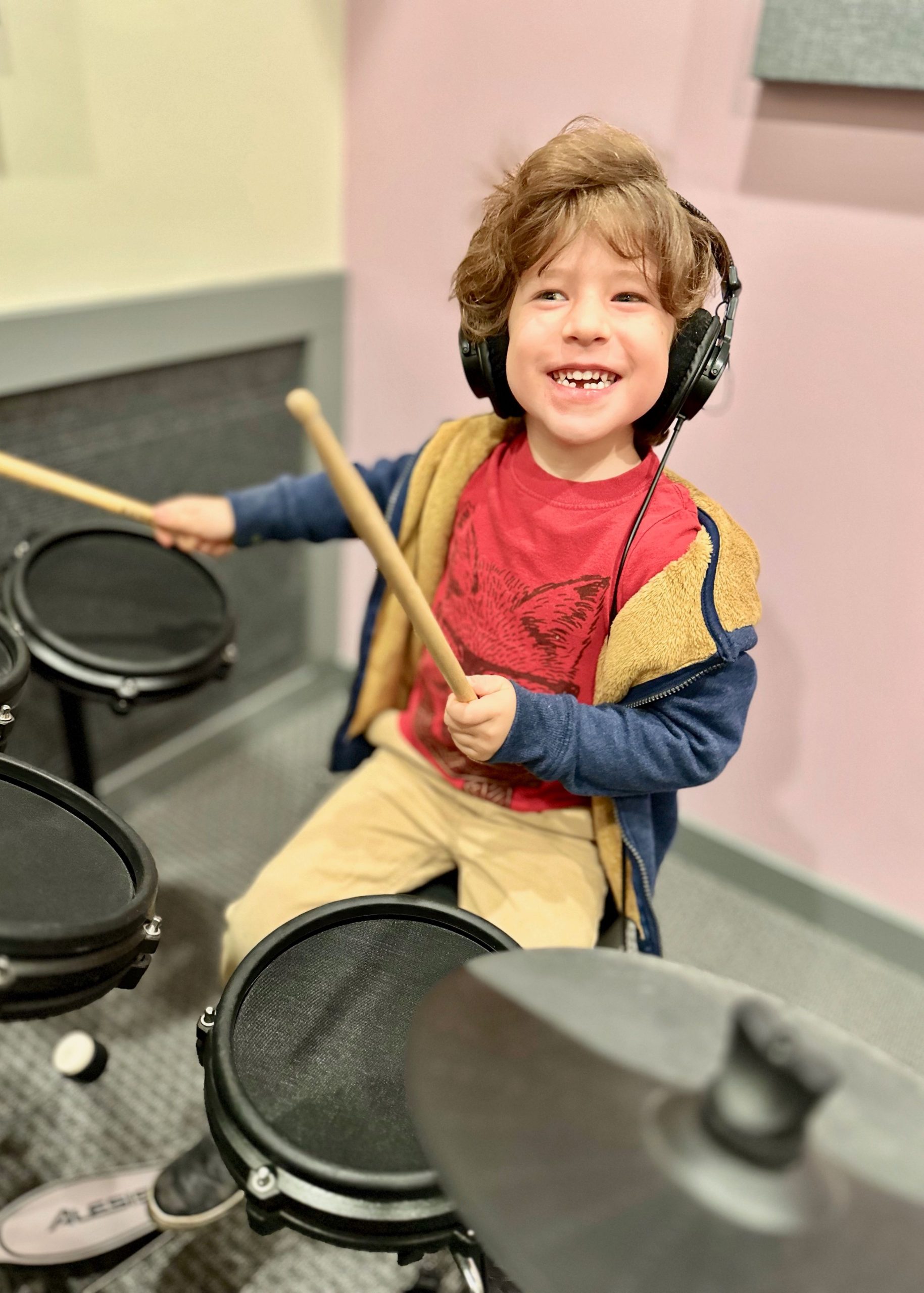
Toddlers are often introduced to simple instruments like shakers, drums, or rhythm sticks. These tools help them explore sound in a hands-on way.
Instrument play teaches cause and effect—when I tap, I hear a sound. It also introduces basic rhythm concepts.
The focus is not on technique, but on exploration and enjoyment.
Social Interaction and Group Participation
Toddler music classes are often one of the first group experiences children have. This creates opportunities for social development.
Children learn to observe others, take turns, and participate in group activities. Even watching other children can be a valuable part of the learning process.
Over time, many toddlers become more comfortable interacting with both the instructor and other children.
What If My Child Doesn’t Participate?
This is one of the most common concerns parents have. The truth is, participation looks different for every child.
Some toddlers jump in right away, while others prefer to watch and listen before joining. Both approaches are completely normal.
In many cases, children who observe at first begin participating gradually as they become more comfortable.
How Classes Support Development
Each part of the class is designed to support early development. Singing builds language skills, movement improves coordination, and group activities encourage social growth.
What makes toddler music classes unique is that all of this happens in a way that feels natural and enjoyable.
If you’re interested in the broader impact, our benefits of toddler music classes guide explains how music supports development in more detail.
Why Structure Matters
The structure of a toddler music class helps create a sense of familiarity. When children recognize what comes next, they feel more comfortable participating.
At the same time, the flexibility of activities allows each child to engage in their own way.
At Tiffany Music Academy, we design classes that feel consistent, supportive, and engaging for every child.
Ready to Experience a Class?
If you’ve been wondering what a toddler music class is like, the best way to understand it is to experience it firsthand.
At Tiffany Music Academy, we create a welcoming environment where toddlers can explore music while building confidence and developmental skills.
Here’s how to get started:
- Learn about our toddler music program:
- Visit our locations page: Culver City / La Mesa
- Schedule your first lesson
To learn more about why these classes are so beneficial for toddlers, read why music classes are the best programs for toddlers!